Last Updated: November 21, 2026
Quick Summary
SIA licensing means the Security Industry Authority licenses individuals who carry out licensable security work in the UK, so most security staff on commercial sites must hold a valid licence for their category. Checking each officer’s licence before deployment confirms they are checked and trained for the role.
- Check every licensable role against the SIA’s current list of licensable activities and categories.
- Verify the physical photocard matches the person, then confirm the licence status with the SIA.
- Confirm the licence category matches the tasks the officer will actually perform on site.
- Record licence number, category, expiry date and who checked, then re-check before renewal.
- Remove any officer whose licence lapses or is suspended from licensable duties immediately.
Table of Contents
- What the Security Industry Authority Does and Why Its Licensing Matters
- Which Security Activities Need an SIA Licence
- SIA Licence Requirements for Security Guards
- In-House Security Versus Contracted Services: Who Is Responsible
- How to Check an SIA Licence Before Deployment
- What the SIA Approved Contractor Scheme Adds to Supplier Assurance
- Security Company Compliance Checklist and Next Steps for Your Site
- Frequently Asked Questions
Commercial sites rely on security staff to protect people, property and stock, and in the UK most of those staff must hold a licence from the Security Industry Authority (SIA). Operations managers, facilities managers and site managers who book guarding, patrols or keyholding need to know how SIA licensing works and how to check it.
The SIA is the public body that licenses individuals working in the regulated private security industry across the UK. Its business plan describes operating a licensing regime for regulated security operatives as its core role, with the aim of making sure licence holders are sufficiently qualified (SIA business plan 2025 to 2026).
What the Security Industry Authority Does and Why Its Licensing Matters
The SIA’s strategic plan describes private security as subject to a legislative regime and a public-body regulator that licenses operatives and enforces the rules (SIA Strategic Plan 2023-2026). In practice, that means a licence is more than paperwork. It is the regulator’s confirmation that an individual has been checked and trained for the role.
Licensing is not a guarantee on its own. One study of the Private Security Industry Act 2001 concluded that the SIA met its aims of reducing criminality and raising standards only to a degree (research on the impact of the Private Security Industry Act 2001).
Which Security Activities Need an SIA Licence
Under the Private Security Industry Act 2001, a person carrying out a licensable activity in the regulated private security industry must hold a valid SIA licence for the category that activity falls into. The Act sets the framework; the SIA publishes the current list of licensable activities and the licence categories that map to them, and that list is the only reliable starting point because categories and conditions are updated from time to time. Check the SIA website for the current position on sia licensing before you treat any role as exempt.
The activities most commonly encountered on commercial sites are:
- Manned guarding, static guarding, patrols, reception and concierge duties where the person is protecting people or property, and guarding at events.
- Door supervision, controlling entry to premises or events, checking credentials and managing queues and capacity.
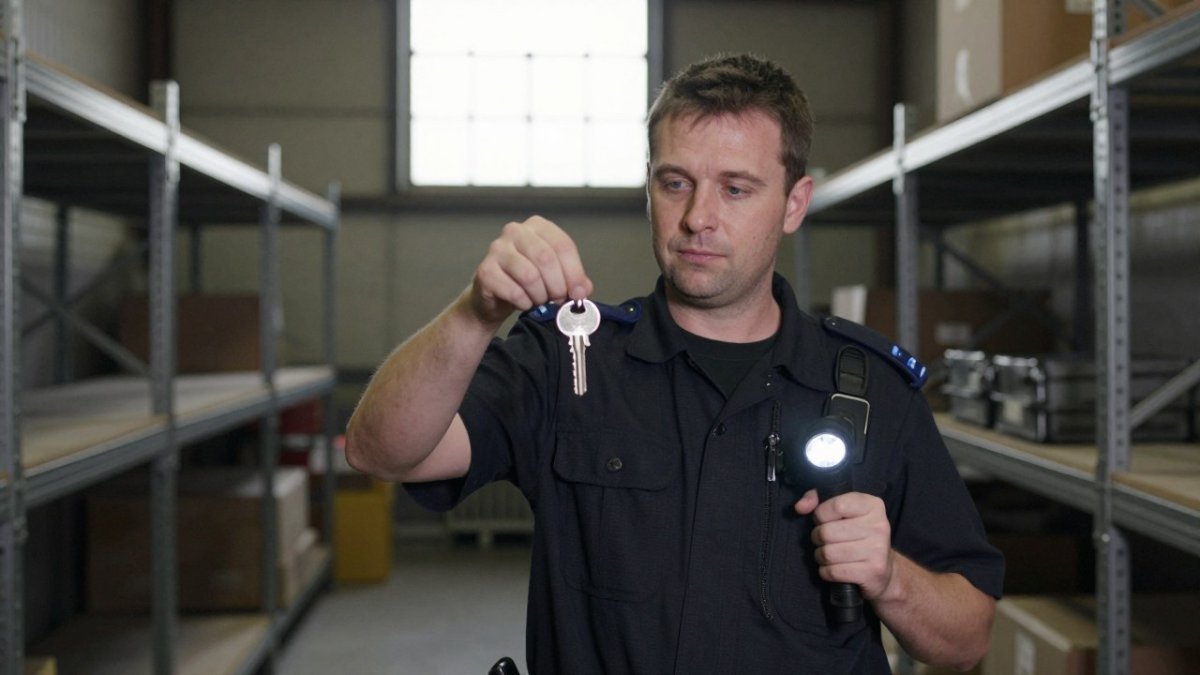
- Keyholding, holding keys or alarm codes and responding to alarm activations, including mobile response.
- Public space surveillance (CCTV), operating CCTV where the purpose is to monitor the activities of members of the public or to identify individuals.
- Close protection, bodyguarding and close protection duties.
- Vehicle immobilising, wheel-clamping and related vehicle immobilisation work in circumstances where it remains licensable.
A role-by-role decision process
Rather than guessing from a job title, apply four questions to each role on your site:
- What does the person actually do? Look at the tasks in the assignment instructions and the site operating procedures, not the job title. A “concierge” who patrols, challenges intruders and protects stock is doing guarding work; a receptionist who only signs visitors in and never protects people or property is not.
- Is the activity on the SIA’s current licensable list? Match the tasks to the published activities and categories. If the tasks span more than one category, the person needs the licence that covers the work they are deployed to do.
- Is there an in-house or contracted distinction that changes who holds the licence? The licensing requirement attaches to the individual carrying out the licensable activity. Whether the person is employed directly by the site or supplied by a contractor changes who is responsible for arranging and evidencing the licence, not whether one is needed.
- Is the role genuinely outside the regulated activity? Some roles sit at the edge, for example, certain reception, car park or retail roles where no protective function is performed. Record the reasoning and the tasks relied on, because an exemption claimed on a job title alone is the most common way a site ends up with an unlicensed person in a licensable post.
Where employers most often get it wrong
A common pattern is a role that has drifted. A receptionist starts escorting contractors, checking alarms or patrolling the loading bay after a theft, and the job description is never updated. The tasks are now licensable but the person holds no licence.
Watch out: a licence in the wrong category is not a defence. A door supervisor licence does not automatically cover a CCTV operator post, and a guarding licence does not cover door supervision.
If a role involves any of the activities above, the person doing it should hold the matching licence before they start work, not after induction, and not pending a renewal.
SIA Licence Requirements for Security Guards
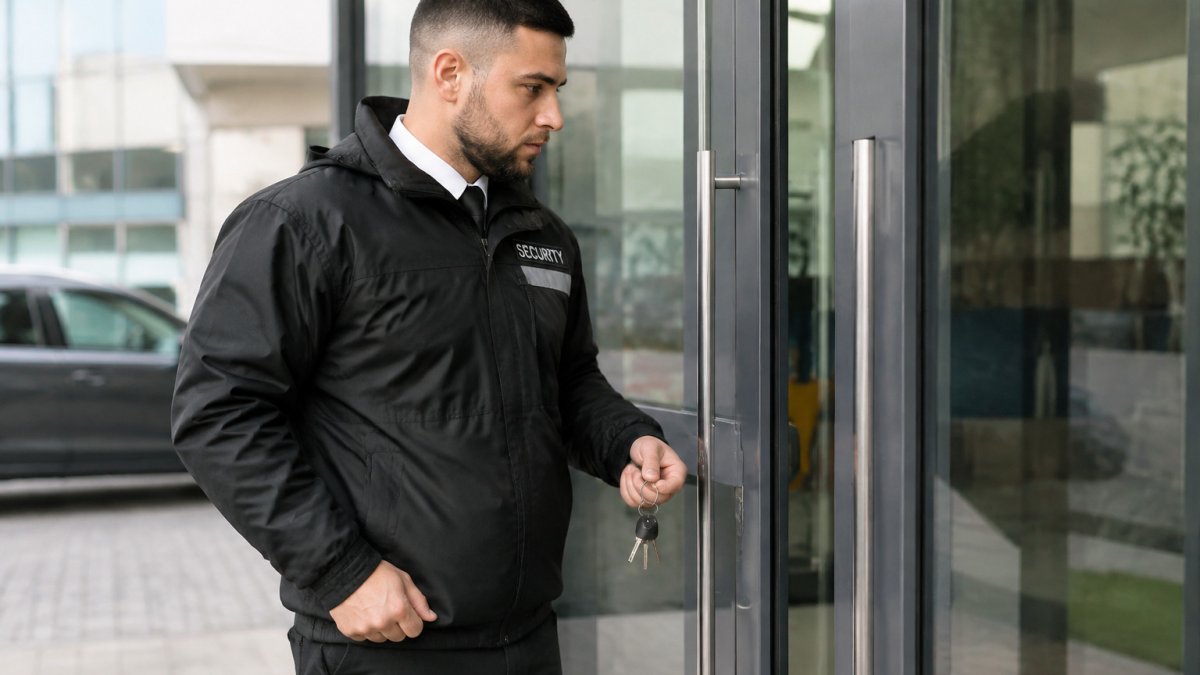
Security guards need an SIA licence for the manned guarding category before they start work. If you need this cover, you can see our manned guarding services in Birmingham and the officers we deploy there. The licence confirms identity, checks criminal record and shows the holder has completed the required training.
Ask every officer to show the photocard licence on arrival. Note the expiry date and the licence category. A licence that does not match the job is a compliance gap, even if the person is otherwise capable.
In-House Security Versus Contracted Services: Who Is Responsible
The licensing rules apply whether the officer is an employee or a contractor. An in-house security team still needs licensed staff for licensable roles. When you use a contracted provider, the duty to supply licensed people sits with that provider, but you still carry risk if you fail to check.
Make the contract clear on three points: who holds the licences, how checks are evidenced and what happens if a licence lapses. Responsibility should not be left to assumption.
How to Check an SIA Licence Before Deployment
A photocopy of a licence proves nothing except that a card once existed. Verify the licence against the SIA’s own records before the officer starts, and build the check into your deployment process so it happens every time rather than once at contract signature.
The verification workflow
- Check the physical photocard against the person. Confirm the name, photograph and licence number match the individual in front of you. A licence presented by someone else, or a photograph that does not match, ends the check there.
- Confirm the licence is current. Check the expiry date on the card and confirm the status through the SIA’s licence-checking service. An expired card is not a licence, and a card that is close to expiry needs a renewal plan before deployment.
- Confirm the category matches the role. Compare the licence category against the tasks in the assignment instructions, using the role-by-role process above. A valid licence in the wrong category is a compliance gap.
- Record the check. Log the officer’s name, licence number, category, expiry date, the date and time of the check, the method used and the name of the person who completed it. Keep the record for the life of the deployment and for any period your contract or insurer requires.
- Re-check at renewal and on any change. Diarise expiry dates and re-verify before renewal, and re-verify if the officer’s duties change to a different category.
When a licence is expired, suspended or revoked
A licence can lapse, be suspended while the regulator investigates, or be revoked.
For contracted staff, the supplier should replace the officer with a licensed substitute and confirm the replacement’s licence details before the substitute starts. For in-house staff, redeploy to non-licensable duties only if such duties genuinely exist, and do not allow the person to continue guarding, keyholding or operating CCTV while unlicensed.
Watch out: a suspension is not a gap you can manage informally. Allowing an officer to keep working while a suspension is in place exposes the site to enforcement action and undermines any insurance position, so treat the removal as immediate and documented.
Recordkeeping that survives an audit
Keep a simple licence register for every licensable post: the post, the named individual, the licence number and category, the expiry date, the date of the last verification and the next re-check date. Review the register monthly and before any contract renewal.
The article sets out a five-step verification workflow that can be checked against the SIA’s records before each deployment.
| Step | What to do | Timing or frequency |
|---|---|---|
| Check the photocard | Match name, photo and licence number to the person | Before the officer starts |
| Confirm the licence is current | Check expiry date and status with the SIA checking service | Before deployment |
| Confirm the category matches | Compare licence category with the assignment tasks | Before deployment |
| Record the check | Log name, number, category, expiry and who checked | At each check |
| Re-check on renewal or change | Re-verify before expiry or if duties change | Before renewal and on any change |
What the SIA Approved Contractor Scheme Adds to Supplier Assurance
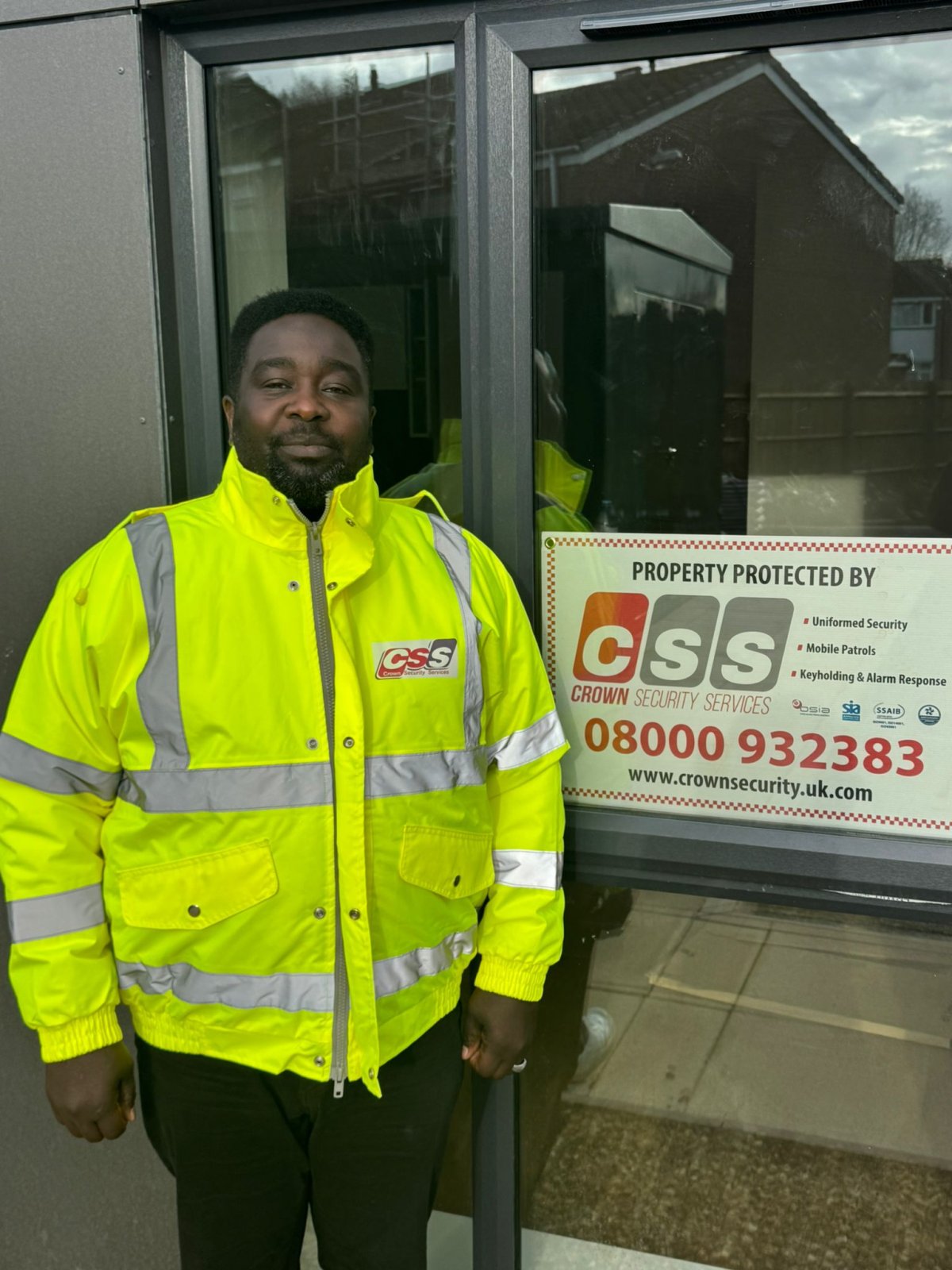
The SIA Approved Contractor Scheme (ACS) is a voluntary standard for security businesses. Holding ACS approval shows that a company has met assessed requirements on how it runs its business, not just on its individual licences. You can read more about Crown Security Services and its SIA ACS approval on our About page. Crown Security is SIA ACS Approved. Ask any supplier, including us, to show their ACS certificate and check it is current.
Security Company Compliance Checklist and Next Steps for Your Site
Use this checklist before you sign a contract or deploy a new team:
- Every licensable role has a named, licensed individual
- Licence numbers, categories and expiry dates are recorded
- The provider holds current SIA ACS approval
- The contract states who checks licences and how often
- A process exists to remove an officer whose licence lapses
If you want help applying this to your site, contact Crown Security to talk through your requirements. Our frequently asked questions cover common compliance and contracting queries. You can also review our staff vetting and licensing approach before you decide.
Frequently Asked Questions
Why is an SIA licence important for commercial security?
An SIA licence confirms that an individual has passed the checks the Security Industry Authority requires for licensable security work, including identity, criminal record and right-to-work checks, and relevant training. For a business, it reduces the risk of employing someone unsuitable to guard premises, handle keys or respond to alarms. Using licensed staff also helps demonstrate due diligence if an incident is later reviewed by insurers, clients or regulators.
Which security roles require an SIA licence?
Under the Private Security Industry Act 2001, individuals carrying out licensable activities must hold an SIA licence. These cover manned guarding, key holding, door supervision, close protection, cash and valuables in transit, and public space surveillance using CCTV. Some roles, such as certain in-house staff or purely administrative functions, may fall outside the regime depending on what the work involves. Where the duties are unclear, the SIA guidance should be checked before a role is filled.
How can a business check whether a security officer has a valid SIA licence?
Ask the officer to show their SIA photocard licence and check the licence number, expiry date and the licence category against the SIA’s public register of licence holders. Confirm that the licensed activities match the duties being assigned on your site. Keep a dated record of each check. Regular re-checks are sensible because licences can be suspended or revoked, and a valid licence at recruitment does not guarantee it remains valid during a contract.
What can happen if a business uses unlicensed security staff?
Using unlicensed individuals to carry out licensable activities is a criminal offence under the Private Security Industry Act 2001, and the business and those who engaged the individual can face prosecution. Beyond legal exposure, a business may face insurance disputes, contract breaches with clients and reputational damage if an incident occurs involving an unlicensed officer. Sourcing staff through a reputable, compliant provider and verifying licences routinely reduces this exposure.